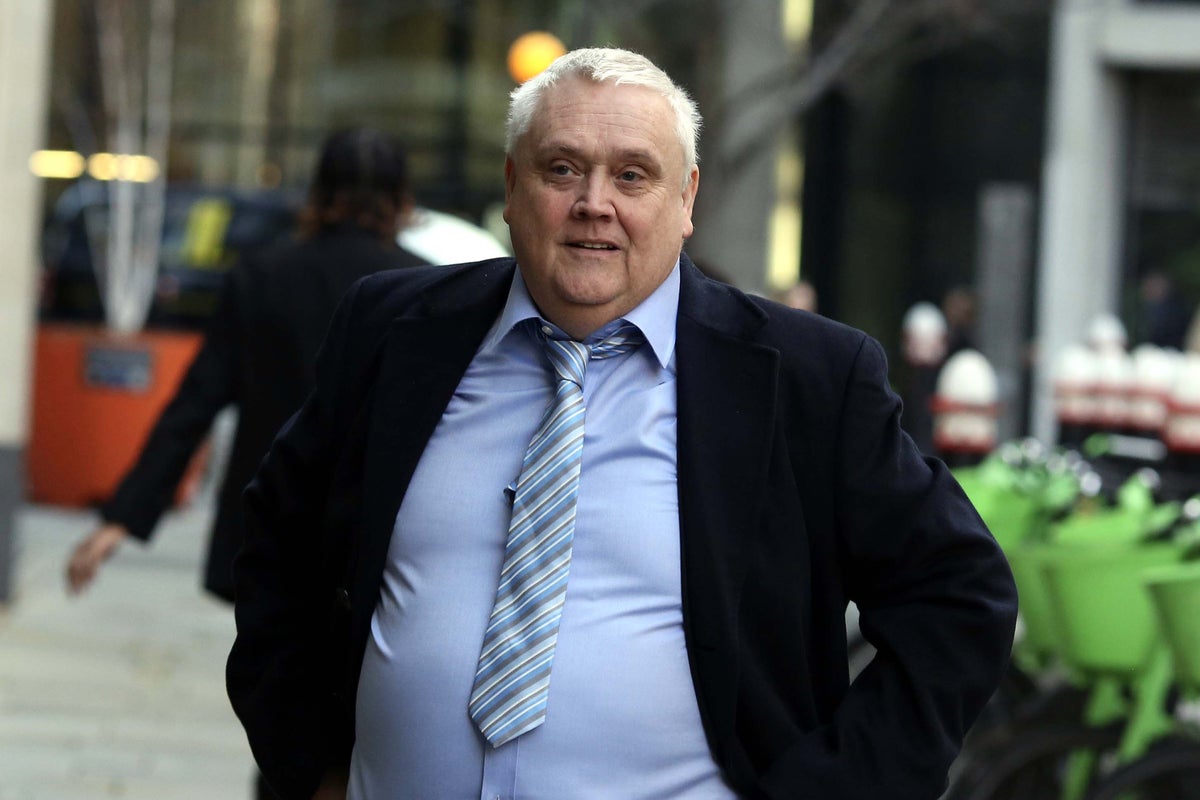
Peter Waddell Ousted: Inside Big Motoring World's Boardroom Shake-up
The world of automotive retail is no stranger to dramatic turns, but few stories capture the essence of ambition, success, and unexpected upheaval quite like that of Peter Waddell and Big Motoring World. For decades, Peter Waddell was synonymous with the colossal car supermarket empire he built from the ground up. However, in a stunning development precisely two years after a significant private equity investment, Waddell, the visionary founder and CEO, has been formally terminated as a director, signaling a seismic shift within the company's leadership. This boardroom shake-up sends ripples through the UK’s competitive car retail landscape, prompting questions about the dynamics between founders and investors, and the future trajectory of one of the nation's largest car supermarkets.
From Humble Beginnings to Car Supermarket Titan
Peter Waddell's journey is a compelling testament to the "rags-to-riches" narrative. Born in Glasgow and taken into care as a Barnado's Boy at just four years old, Waddell faced significant adversity, including a period of homelessness, before he embarked on a path that would see him establish an automotive dynasty. His resilience and entrepreneurial spirit culminated in the founding of Big Motoring World 35 years ago.
What began as a modest 20-car dealership blossomed under Waddell’s stewardship into an industry behemoth. Today, Big Motoring World stands as one of the UK’s most successful car supermarket operations, boasting an impressive stock of up to 3,000 vehicles. As CEO, Waddell was the driving force behind the group's aggressive expansion, increasing its geographic footprint, stock volume, and sales. He was also an early adopter of technology, leveraging innovation to enhance efficiency in vehicle preparation and inventory management – a forward-thinking approach that cemented Big Motoring World’s market position. To delve deeper into this incredible backstory, read
From Rags to Riches: Peter Waddell's Big Motoring World Empire.
The Freshstream Era: A Partnership's Promise and Peril
The catalyst for the recent boardroom changes can be traced back to 2022, when private equity firm Freshstream made a substantial investment in Big Motoring World. At the time, Peter Waddell expressed his "delight" at the partnership, envisioning that Freshstream's capital and expertise would "further accelerate our ambitious growth strategy." Such investments are common in mature industries, offering founders liquidity and access to strategic resources necessary for scaling operations to new heights.
Freshstream's involvement quickly led to a bolstering of Big Motoring World's leadership team, introducing seasoned motor retail veterans like former HPI and Aston Barclay boss Neil Hodson, and former Sytner chairman Lawrence Vaughan. These appointments were clearly aimed at bringing in diverse experience and corporate governance structures to facilitate further expansion. While initially presented as a collaborative effort to scale the business, the underlying dynamics of such partnerships often involve a delicate balance between a founder's vision and an investor's strategic directives.
Interestingly, the deal with Freshstream followed a period of notable financial activity within Big Motoring World. The 2021 accounts showed the group's highest-paid director's remuneration jumped significantly from £600,000 in 2020 to £1.6 million. Furthermore, the company received substantial government Covid grants – £2.6 million in 2020 and £1.6 million in 2021 – figures that might have invited increased scrutiny over financial stewardship and operational efficiency post-investment.
The Boardroom Battle: Why Founders Get Ousted
The termination of Peter Waddell as a director, formally recorded at Companies House, underscores a stark reality for many founders who take on private equity partners. While the exact reasons for the "acrimonious" ousting remain undisclosed in full public detail, such situations often stem from a confluence of factors:
- Divergent Visions: What starts as a shared goal for growth can evolve into conflicting strategies regarding market approach, operational control, or even company culture.
- Growth Pressure: Private equity firms typically have aggressive growth targets and timelines for their investments, which can lead to rapid decision-making and a desire for more direct control over execution, sometimes clashing with a founder's established methods.
- Operational Control: As new experienced executives are brought in by investors, there can be a natural shift in operational authority, leading to friction if the founder is accustomed to ultimate decision-making power.
- Governance and Accountability: Increased corporate governance demands from investors can highlight areas where a founder-led company might need to adapt to more formalized structures and reporting.
In many cases, the founder's passion and entrepreneurial drive, while instrumental in building the company, may be seen as less aligned with the corporate structures and scalable processes favored by private equity for the next phase of growth. For any founder considering private equity investment, understanding the potential for these shifts in control and strategic direction is paramount. Clear pre-agreed roles, responsibilities, and exit mechanisms are crucial to mitigate future disputes.
Despite his termination as a director, Peter Waddell's involvement with Big Motoring World is far from over. His company, Peter Waddell Holdco, remains the largest shareholder. However, even this entity shows signs of turbulence, with its latest accounts being six months overdue at Companies House. Furthermore, reports indicate that Waddell is now suing Big Motoring World, suggesting a legal battle is underway to resolve the fallout from his ousting.
What's Next for Big Motoring World and Peter Waddell?
Big Motoring World, now with eight locations across England, continues its aggressive expansion, recently moving into the Midlands with the acquisition of two car supermarkets from rival ID10's Available Car. This move positions the company to potentially near £1 billion in annual revenues, fulfilling the ambitious growth strategy that the Freshstream investment was intended to accelerate. The new leadership, spearheaded by industry veterans, will undoubtedly steer the company with a renewed focus on corporate strategy and expanded market penetration.
For Peter Waddell, the situation is complex. While he is no longer at the operational helm, his substantial shareholding through Peter Waddell Holdco means he retains a vested interest in the company's performance. His lawsuit against Big Motoring World indicates a desire to contest the circumstances of his departure, potentially seeking redress or clarity regarding his position and the company's direction.
The departure of a charismatic founder often marks a pivotal moment for any organization. For Big Motoring World, it signifies a transition from a founder-centric vision to a more corporate, investor-driven strategy. For the employees and customers, the immediate impact may be minimal, as the operational machinery of such a large business is designed to withstand leadership changes. However, the long-term cultural and strategic shifts under new leadership will be keenly watched. Understanding these potential shifts is key to navigating the company's next chapter, as discussed in
Big Motoring World's Future: Navigating Post-Waddell Leadership Changes.
Conclusion
The ousting of Peter Waddell from the directorship of Big Motoring World is a high-profile case illustrating the intricate and often tumultuous relationship between entrepreneurial vision and private equity ambition. Waddell's remarkable journey from a Barnado's Boy to the architect of a major car supermarket empire will forever be part of the Big Motoring World legacy. However, his departure underscores the evolving landscape of corporate governance and control in an era of rapid growth and investment. As Big Motoring World continues its march towards becoming a billion-pound enterprise, all eyes will be on its new leadership to see how they navigate this challenging transition, while the legal proceedings involving its founder promise to add further chapters to this compelling corporate saga.